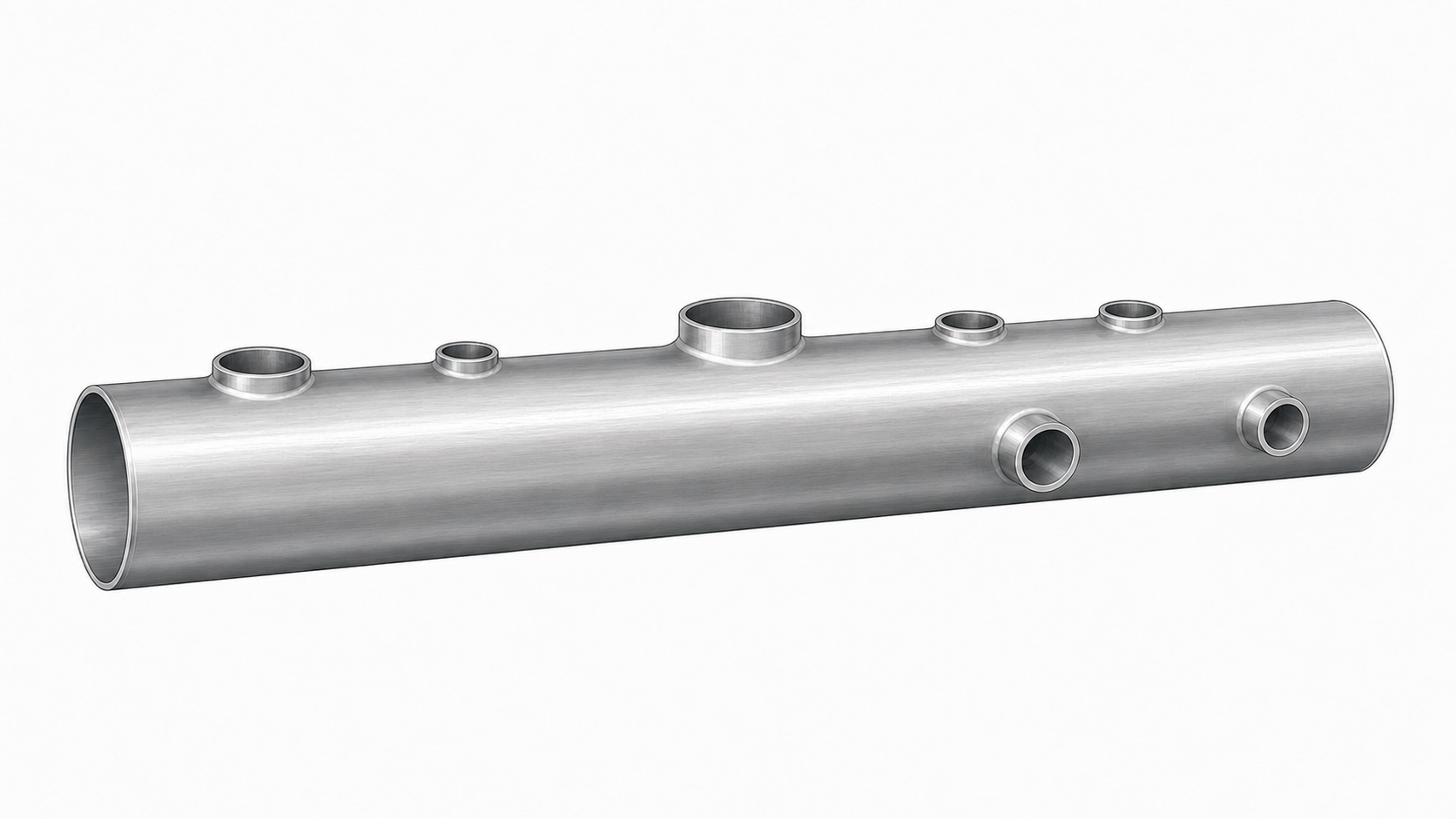
Forming the outlet from the main pipe reduces fittings and welds. We consider the internal flow surface, manufacturability, quality control, and space savings together.
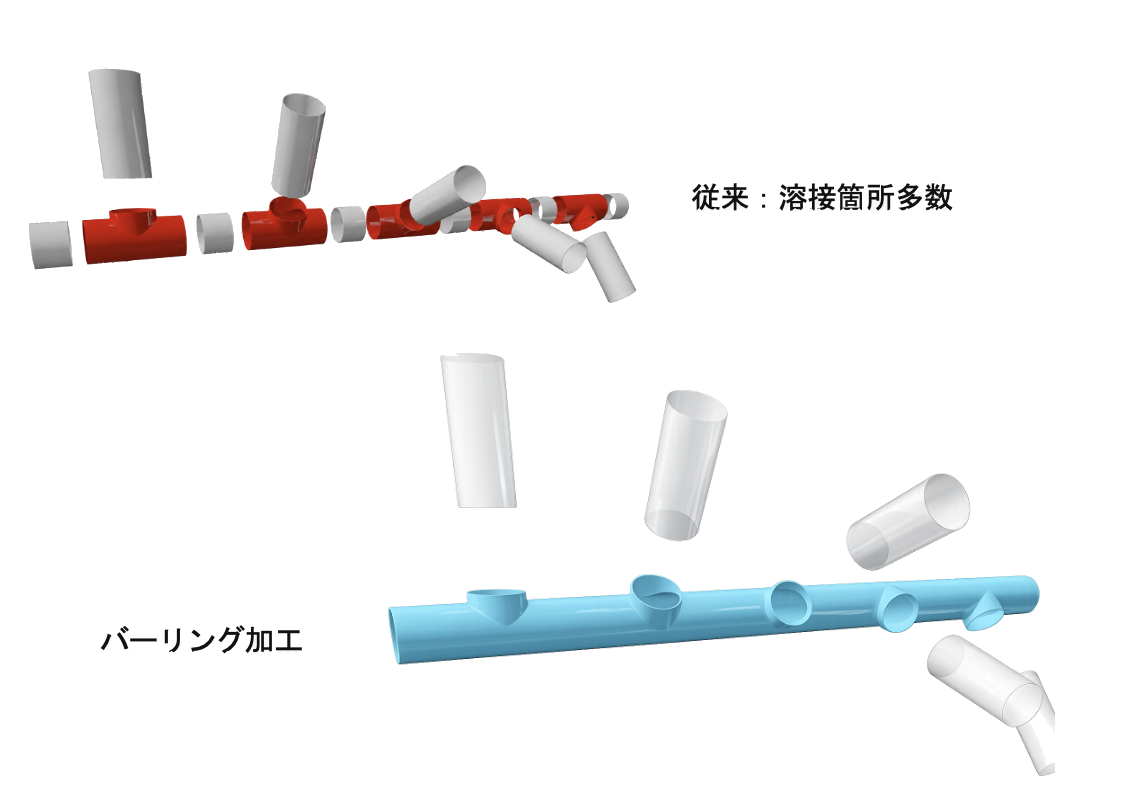
1/3Example weld reduction
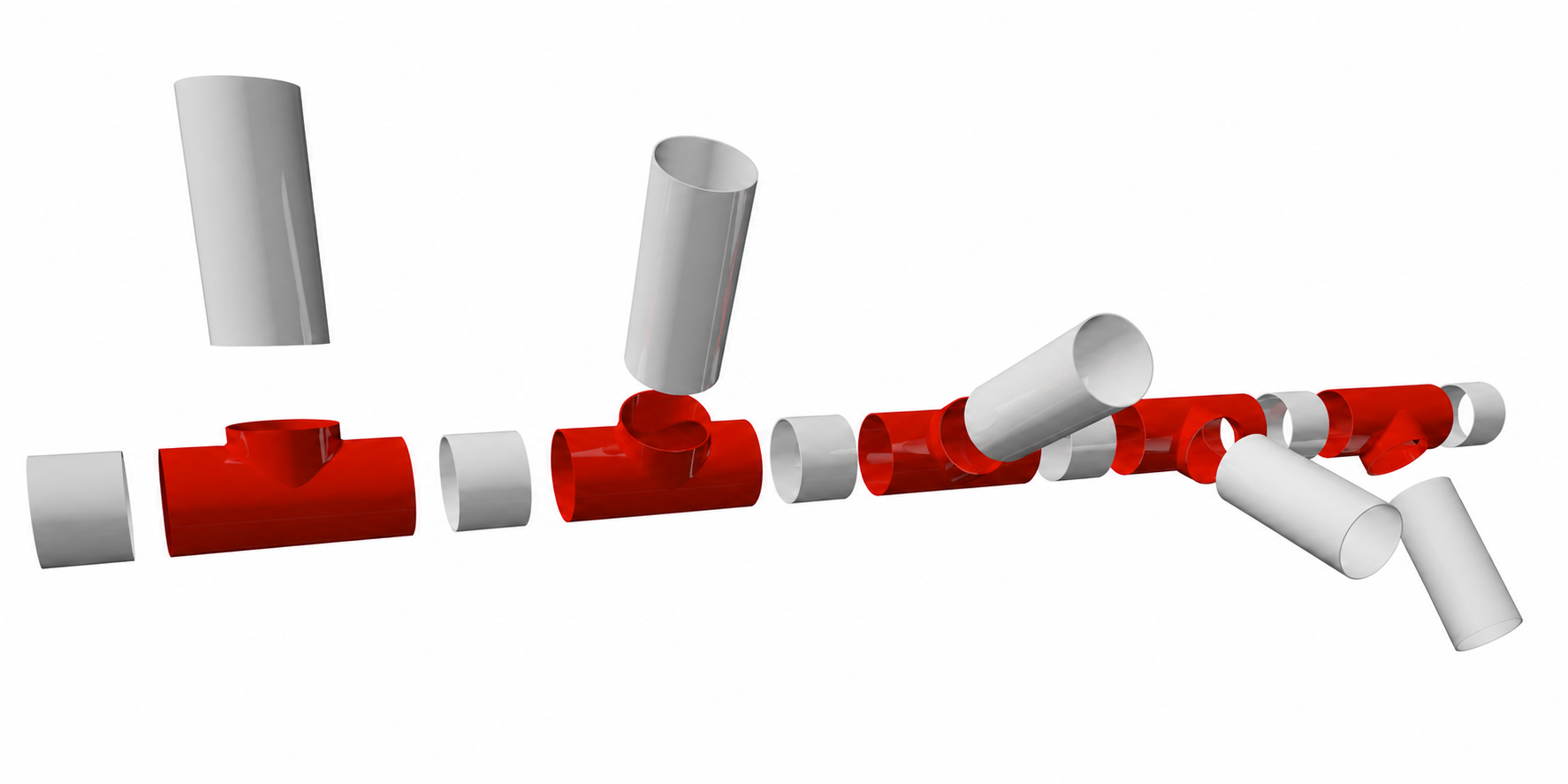
Five-branch header: 15 welds reduced to 5
φ8〜φ2300Published main-pipe range
Subject to geometry, material, and wall thickness
φ5〜φ2000Published forming range
Range shown in our company profile
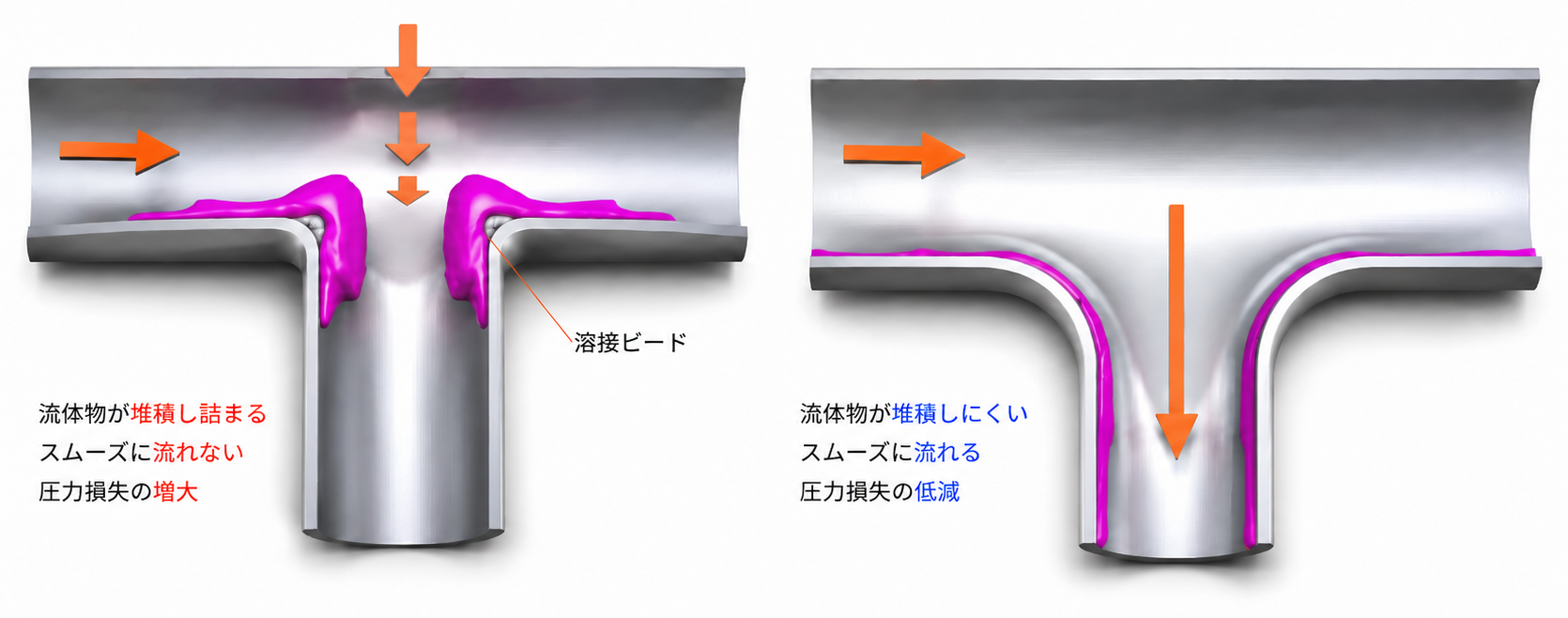
FLOW DIFFERENCE Flow difference
ConventionalWeld beads disturb the flow
Fluid tends to stagnate and pressure loss increases
Burring FormingA smooth path right through the branch
The flow stays smooth and pressure loss is contained
Pressure loss reduced by roughly 18–40%※
* Simplified flow-analysis figures under our assumed conditions. Results vary with fluid, flow rate, pipe diameter, number of branches and branch geometry.
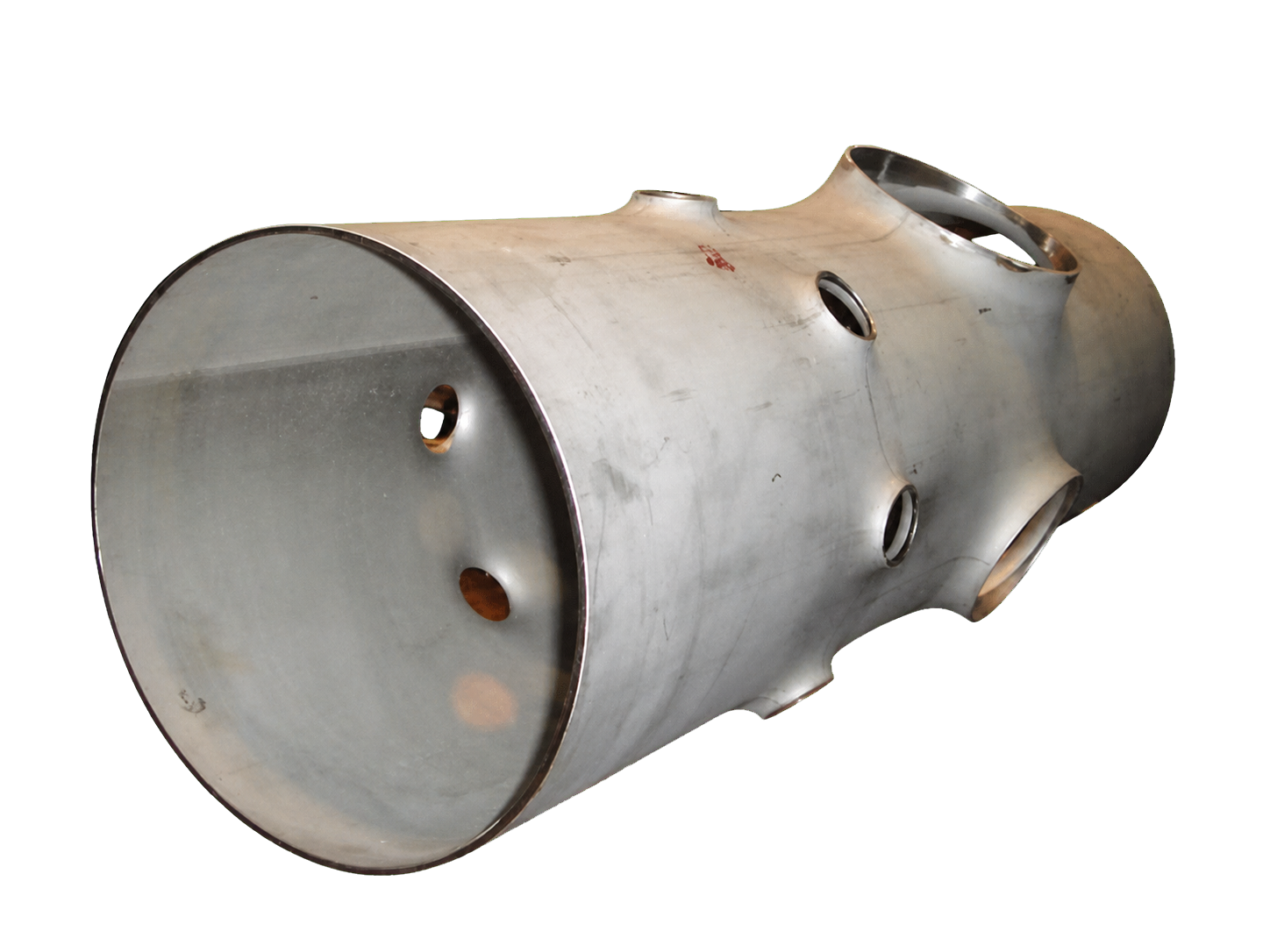
DIRECT FORMINGThe branch is formed directly from the main pipe.
ARAKI DIFFERENCEWhy Araki
From joining by weldingto forming directly from the main pipe.
Reduce welding. Improve piping reliability.
Forming the branch directly from the main pipe reduces complex cutouts and welded fittings. The low-resistance geometry shortens fabrication and supports consistent quality.
Welding cost cut to one third or less※
* Compared with conventional construction. Results vary with geometry, material, size and quantity.
01Fewer welds and shorter bead length
02Simplified quality control and inspection
03Branch geometry with lower flow resistance
04Wide range of materials, diameters, and wall thicknesses
FORMING VARIATIONS
Materials, angles,and branch counts.
Rather than forcing one method, we build the machining conditions around the function you need.
BURRING PROJECTS / Projects
Applications, materials, and diameters. Turning diverse requirements into reality.
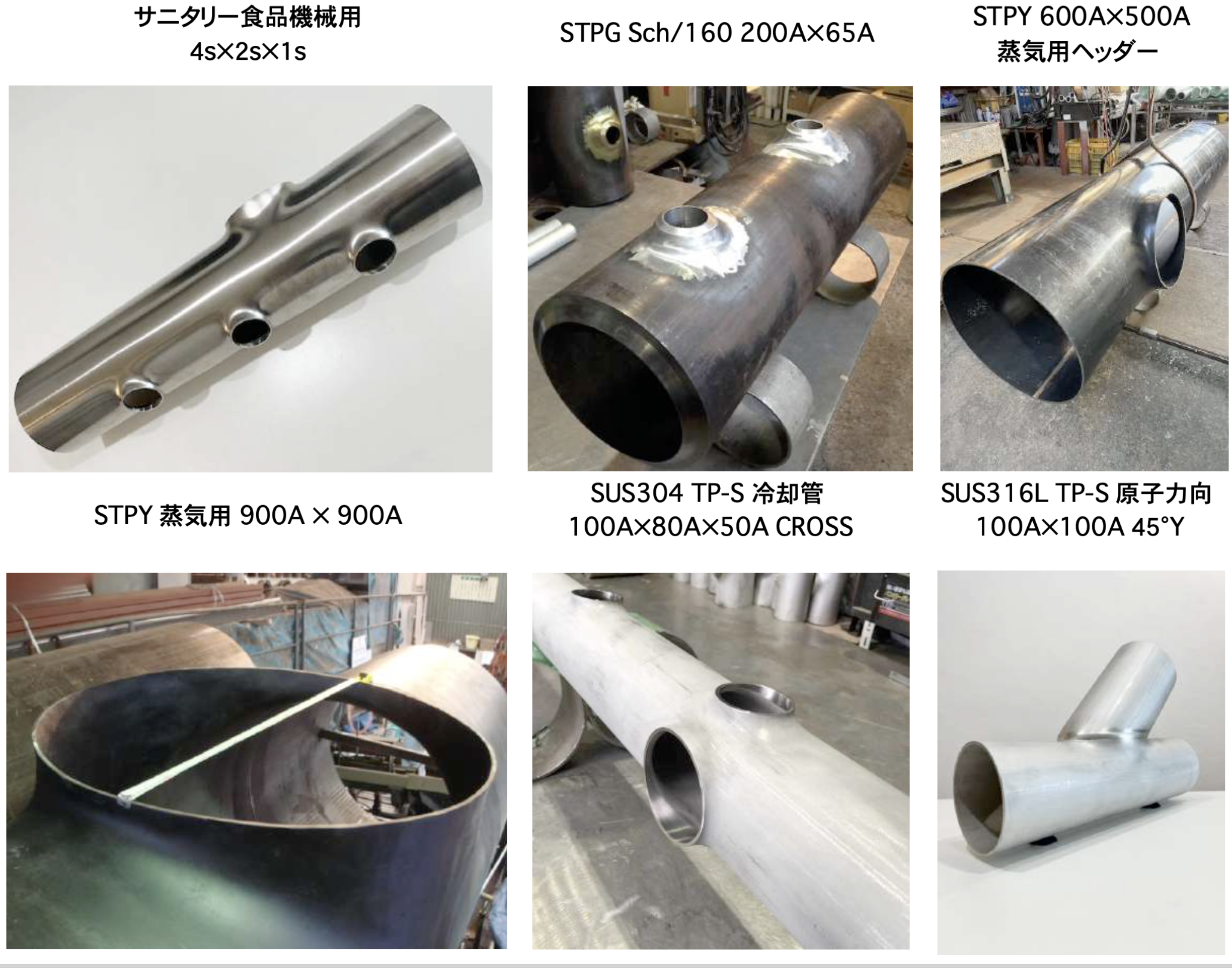
From sanitary piping to heavy-wall high-pressure pipe, large-diameter steam headers, and reducing or angled branches. Here is a selection of burring work we have actually delivered.
Burring project examples
TECHNOLOGY / APPROACH
Burring Forming
Branches are formed directly from the main pipe to reduce welding, improve strength, flow performance, dimensional accuracy, and quality control, and enable more compact units.
01LESS WELDING
Fewer joints for easier piping management
In a five-outlet header comparison, burring needs 5 weld points against 15 for the conventional method. That reduces not only welding work but also the scope of inspection, finishing and quality control.
02SMOOTH FLOW
Smooth branch geometry with less stagnation
A branch rising continuously from the main pipe makes it easier to avoid internal steps and weld beads. We address flow resistance and contamination concerns according to the application and conditions.
03ENGINEERING DATA
3D CAD/CAM backed by manufacturing data
Decades of accumulated pipe standards and machining conditions are evaluated in 3D CAD/CAM. Diameter, material, wall thickness and branch position are resolved into a manufacturable form.
CAPABILITIES
Capabilities
SUS304 and SUS316 grades
Titanium, carbon steel, aluminum, and more
Thin- to heavy-wall piping
Multiple, reducing, and angled branches
Prototype through production
Integrated fabrication and welding
* These are representative capabilities. Feasibility is assessed individually against geometry, dimensions, material, wall thickness, quantity and quality requirements.
APPLICATIONS
Applications
Water treatment equipment
Building and fire protection systems
Power and energy systems
Food and pharmaceutical plants
Semiconductor and data-center facilities
Marine and aerospace applications
You can consult us using the application, photos, or handwritten notes even without drawings.
WORKFLOW
From consultation to production
01Requirements review
023D CAD/CAM review
03Machining, welding, inspection
CONTACTConsult us about Burring Forming
Consult our engineers before your requirements are finalized.
Send whatever you have — drawings, notes, images or site photographs. From the application, material, size, quantity and your current problem, we work out the manufacturing method together.